The California Black Teacher Pipeline Roadmaps
The Black teacher pipeline is a critical component of educational success in California. Research shows the benefits of Black teachers for learners of all racial and ethnic backgrounds, and particularly for Black students.
Facing a persistent teacher shortage, California has made significant investments in teacher recruitment over the past years. These investments have resulted in important increases in the number of teachers of color across the state, but that overall growth hides a small but troubling decrease in the number of Black teachers.
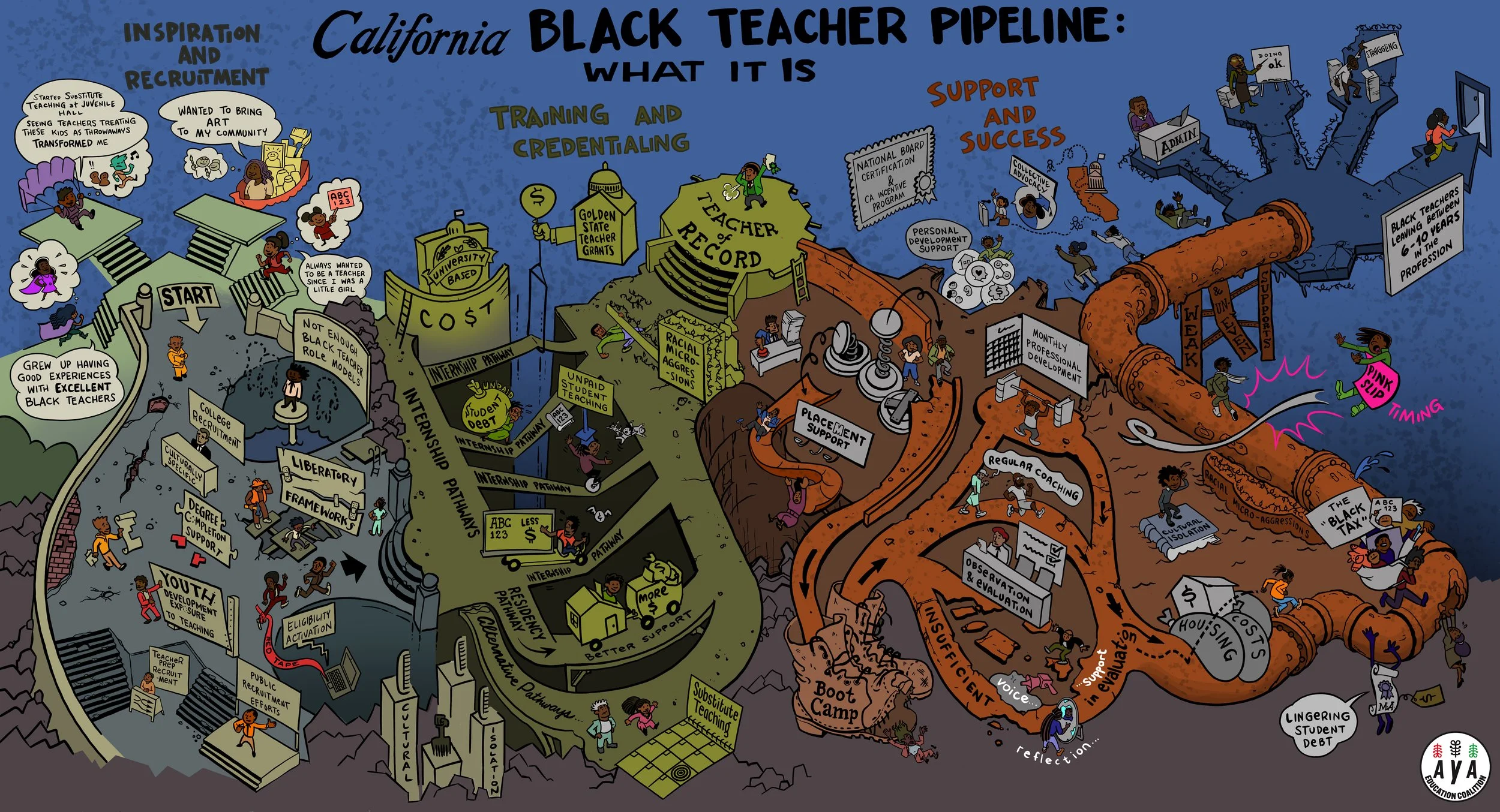
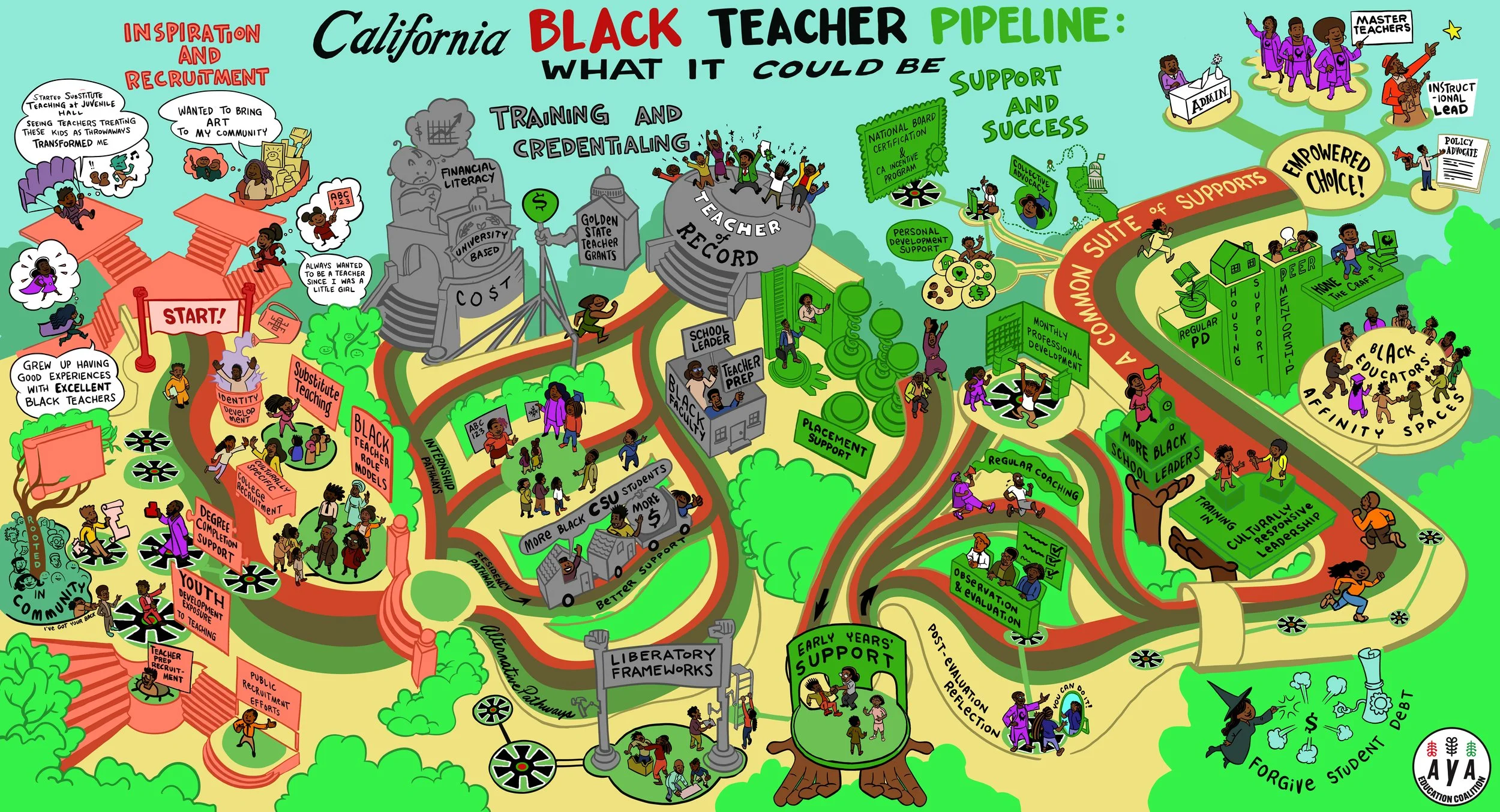
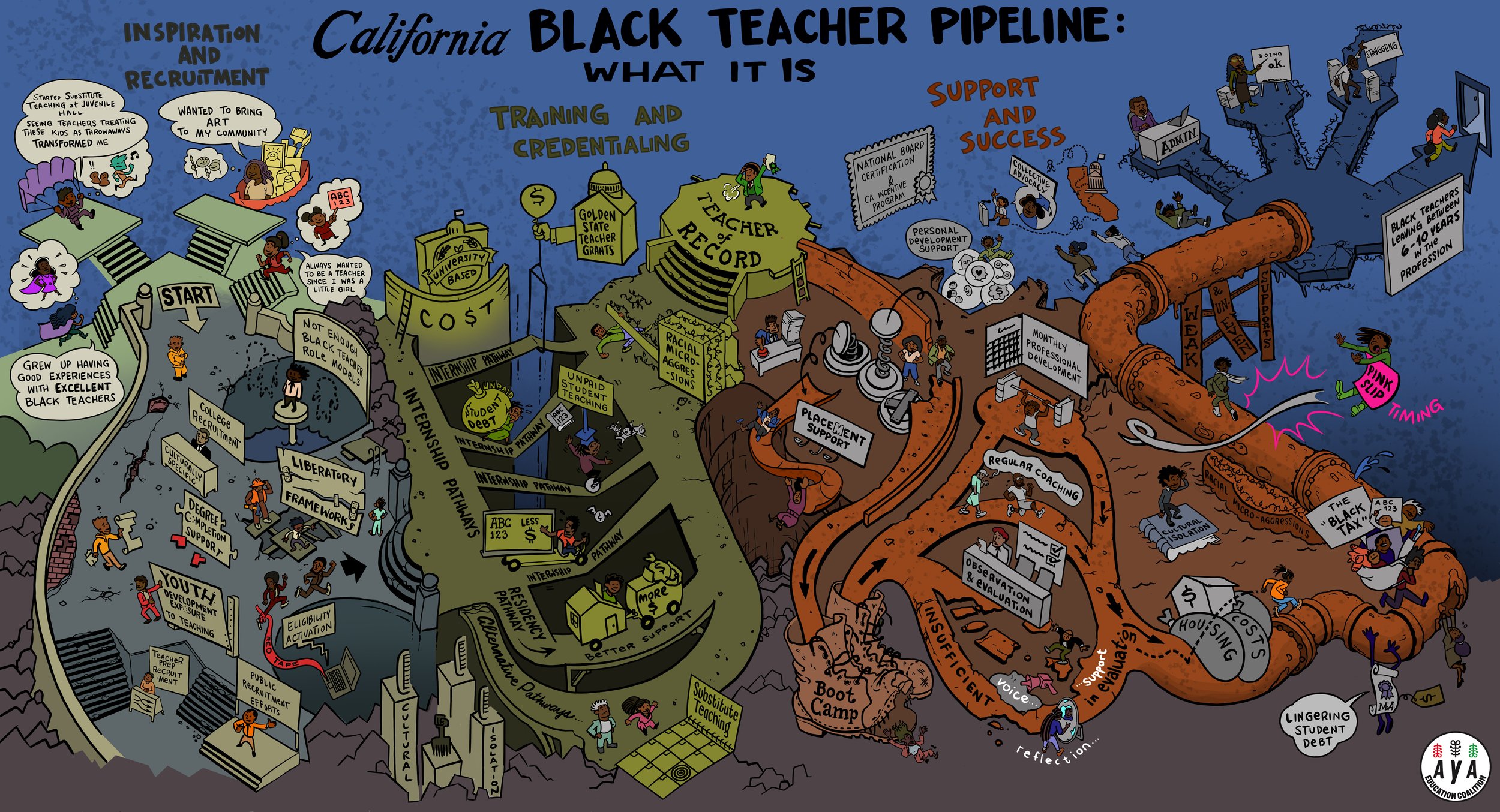
To explore the underlying dynamics leading to California’s failure to bolster the number of Black educators, The Aya Education Coalition (AEC) developed the ‘What It Is’ visual roadmap. To move past admiring the problem, AEC envisioned ‘What It Could Be’ if a full suite of opportunities and supports were provided current and potential Black educators. In collaboration with visual artist Alan Quiros, UC Berkeley researcher Brenda Gonzalez Guerrero, and Black educators across California, The Aya Education Coalition is proud to present this pair of California Black Teacher Pipeline Roadmaps.


What It Is
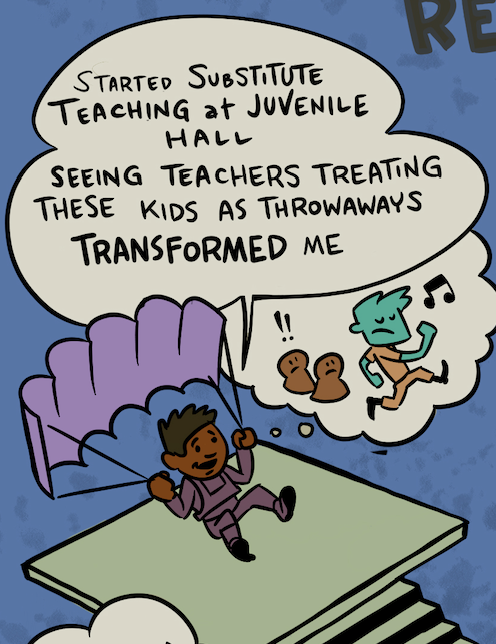
California faces a persistent shortage of Black educators — not because of a lack of talent, but because of systemic barriers embedded throughout the teacher pipeline:
Early exposure to teaching careers is limited in Black communities.
Recruitment strategies are underfunded, fragmented, and culturally disconnected.
Too few Black teacher role models exist to anchor aspiration, resulting in significant talent loss before candidates even reach college.
Credential pathways are costly, complex, and inconsistently supported.
Unpaid student teaching, rising tuition, and accumulating debt make completion financially untenable for many candidates.
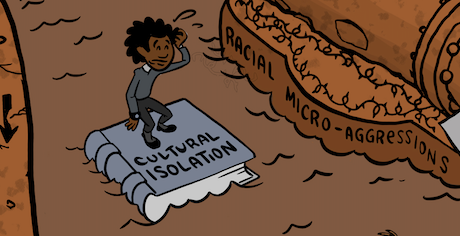
At the same time, racial isolation and microaggressions within preparation programs reduce persistence and completion rates.
Placement into first teaching roles lacks coordination and accountability.
Mentorship and professional development systems are fragmented.
Evaluation structures often fail to reflect culturally responsive pedagogy.
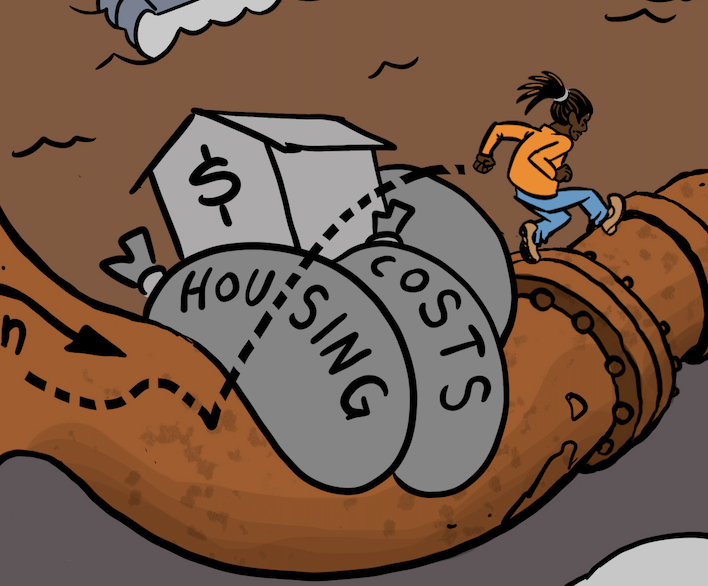
Last, but not least: the combined pressures of housing costs, workload inequities, and cultural taxation drive early career attrition.
The result: California loses Black educators at every stage of the pipeline.
[ This is what it is. ]
Solving this challenge requires coordinated investments in early recruitment, streamlined credential pathways, paid clinical training, intentional placement, and long-term professional support.
Strengthening this pipeline is not simply an equity strategy. It is a workforce imperative, an educational necessity, and an investment in a more sustainable California.
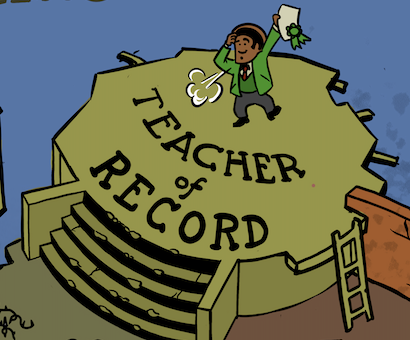
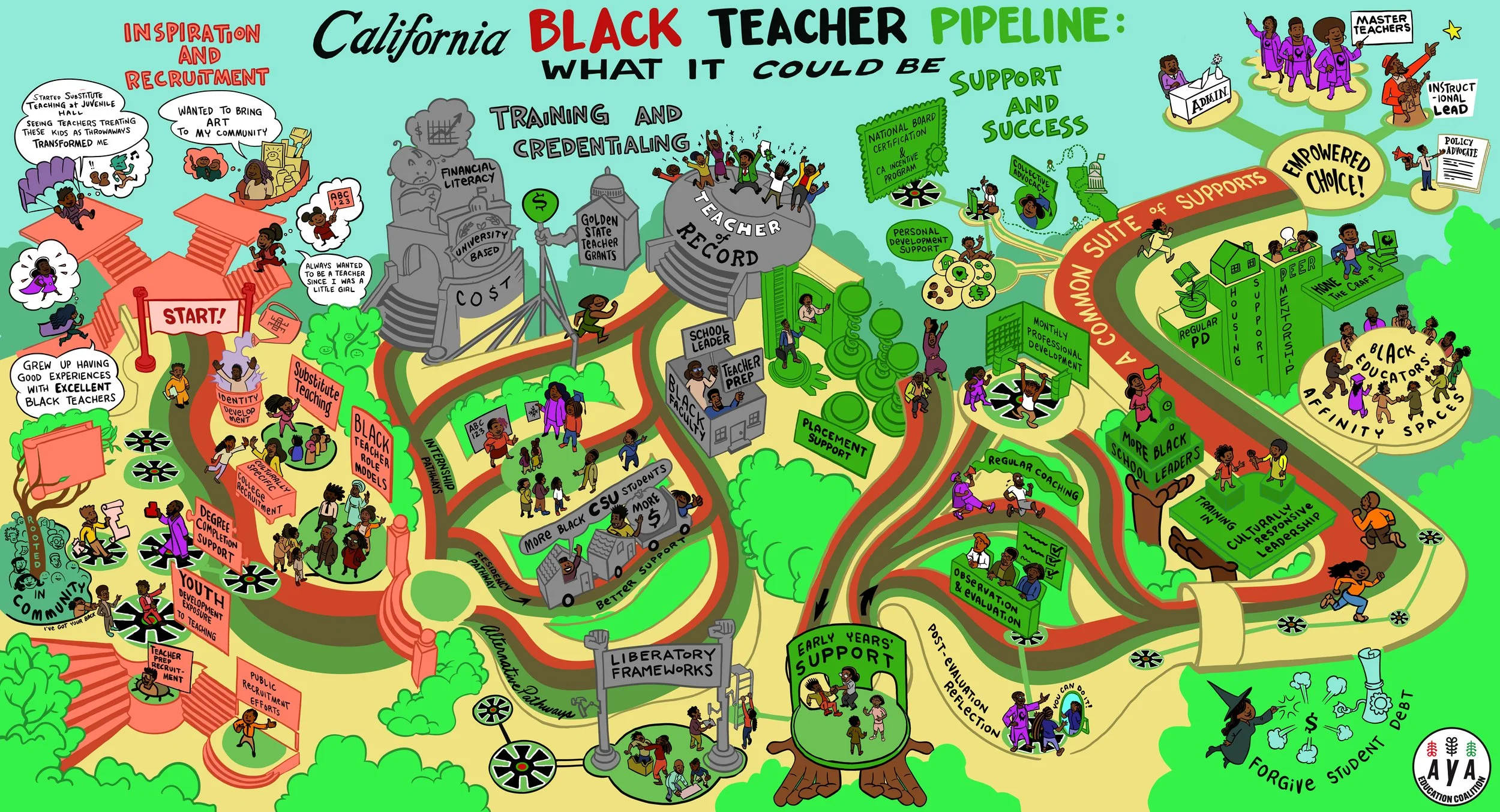
What It Could Be
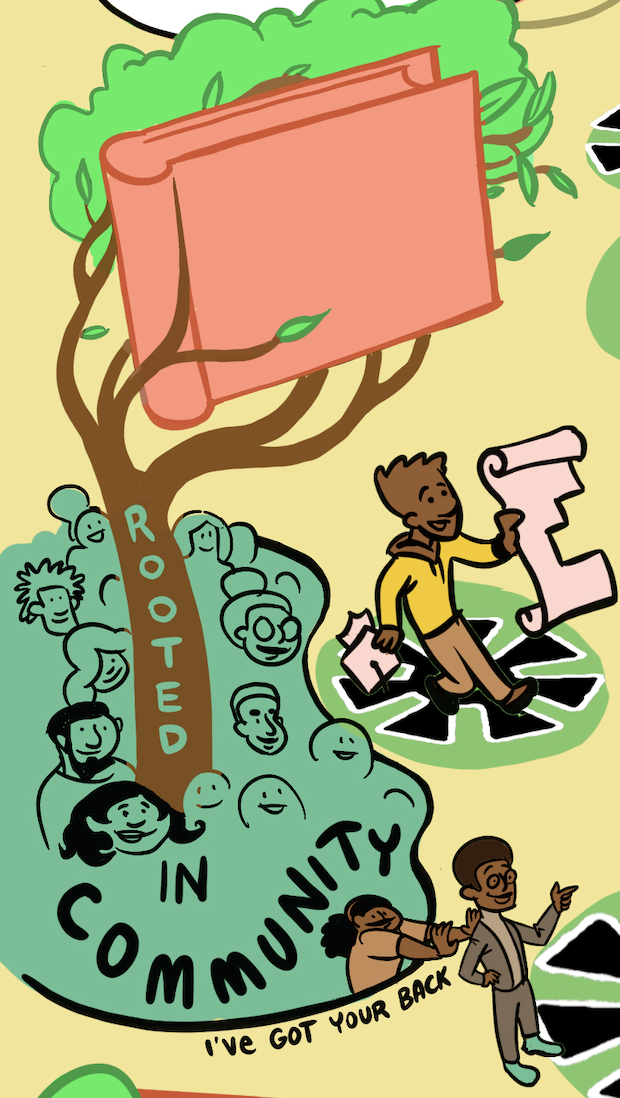
What if becoming a teacher felt like an invitation, not an obstacle course?
What if Black students were called into the classroom early, guided by mentors, surrounded by possibility, and told from the very beginning, “We need you here”?
What if, at every step, representation wasn’t rare — it was expected?
What if identity was nurtured, culture was honored, and belonging was built into the system?
What if training was clear, financed, and supportive, so talent could focus on learning and not just surviving?
What if first-year teachers were placed with intention, wrapped in coaching, uplifted by mentorship, and evaluated for growth, not fear?
What if housing was affordable, wellness was accessible, and leadership pathways were visible?
What if Black educators didn’t just enter the profession, but stayed, thrived, and reached back to lift the next generation?
What would our classrooms look like?
Our schools?
Our communities?
This is the future we can build together.
This is a dream that can become reality.
This is what it could be.